


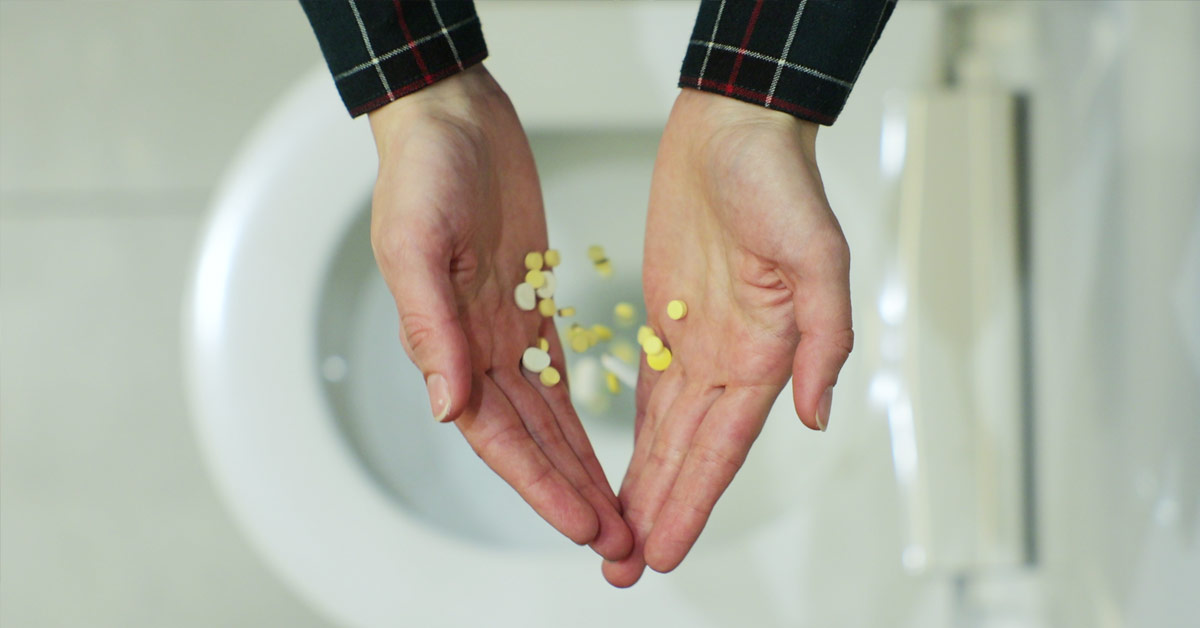
Are you trying to flush them or anything else away?
It may be convenient, but the toilet isn’t the best place to get rid of old medications, vitamins, supplements, or drug paraphernalia such as syringes or needles. Nor is it a good receptacle for cosmetics, nail polish remover, or hand sanitizer because they are considered to be hazardous waste, in addition to anything flammable, corrosive, toxic, poisonous, or explosive.
If it doesn’t clog your drain or isn’t disposed of properly, it could have far-reaching ramifications. Sending anything through the wastewater system doesn’t guarantee it will receive the necessary treatment to mitigate impact on the environment and water quality. It could end up in Kempenfelt Bay, affecting drinking water, fish, plants, and recreational life (swimming, etc.).
There are places in Barrie to divert hazardous waste away from the garbage. Other problematic items, such as light bulbs, electronics, metals, etc., can be dropped off at the city’s Recycle Depot.
Are you abusing your plumbing?
Beyond substances, there are many other ways to abuse your plumbing. In fact, the toilet is one of the most abused fixtures.
Why the toilet? Because of the things people and animals try to flush. Dogs and children will deposit toys in toilets.
Adults have been known to drop a range of items from car keys to false teeth and cell phones in the toilet. Wipes are not good for drains. Dental floss isn’t a good idea either because it will collect and eventually clog your drain.
Sinks are not immune. Bar sinks, for example, can become clogged with a cocktail mix of stir sticks and straws. Kitchen sinks collect coffee grounds, kitchen fats, and food bits to clog your drain. Laundry sinks collect hair and fiber lint.
Drains are at the top of the list of plumbing parts that receive abusive treatment.
Have you ever looked down your drain?
It isn’t pretty. Showers collect hair. Bathroom sinks collect a mix of hair, toothpaste, and soap, forming green slimy gunk to slow and eventually clog your drain. You may also find scum collecting at the stopper rim.
Much of the above can be eliminated with regular maintenance.
If you use a filter system, change the filters regularly.
If you live in the country, don’t forget to schedule a regular pump out of your septic system. How often depends on use. Some pump-out companies will also issue a report of any potential issues.
Seasonal cottagers need to be aware of lake sediment buildup in pumps and hot water tanks if there is no filter on the incoming water line.
Lack of winter maintenance could result in frozen pipes, split lines, and no water movement. Make sure everything is drained properly, antifreeze is used where applicable, and water heaters are turned off at the breaker.
Check sump pumps to make sure they are working properly and are ready to go when you need them. Turn them on and off again and manually move the float to make sure it shuts off. Check the sump pump pit area from top to bottom to make sure there are no obstructions or unwanted sediment at the bottom of the pit that would prevent the sump pump system from starting and stopping.
Lift the lid off the toilet tank. Flush the toilet and check that the flapper seals itself after the tank is filled. Otherwise, water will leak into the bowl.
If you have a drain in your home that isn’t used very much, it will smell. Make sure to maintain a level of water in it to block sewer gas from entering your house.
Sometimes the ‘fix’ isn’t the cure for a troubled drain. Exercise caution with the use of chemical drain cleaners. Wear eye protection and gloves, and follow the directions carefully.
If you run into a problem, call Plumbtech Plumbing for help at 705-722-7209.